Thermador Oven Repair in Camarillo, CA
Thermador oven repair in Camarillo covers elements, igniters, control boards, and self-clean lockouts, with same-day availability in most cases.
Thermador oven diagnostics and repair
Serving Camarillo and the surrounding area
Same-day availability in most cases
Quality Service for Major & Luxury Brands































Thermador oven repair in Camarillo covers elements, igniters, control boards, and self-clean lockouts, with same-day availability in most cases.
Last updated October 2026
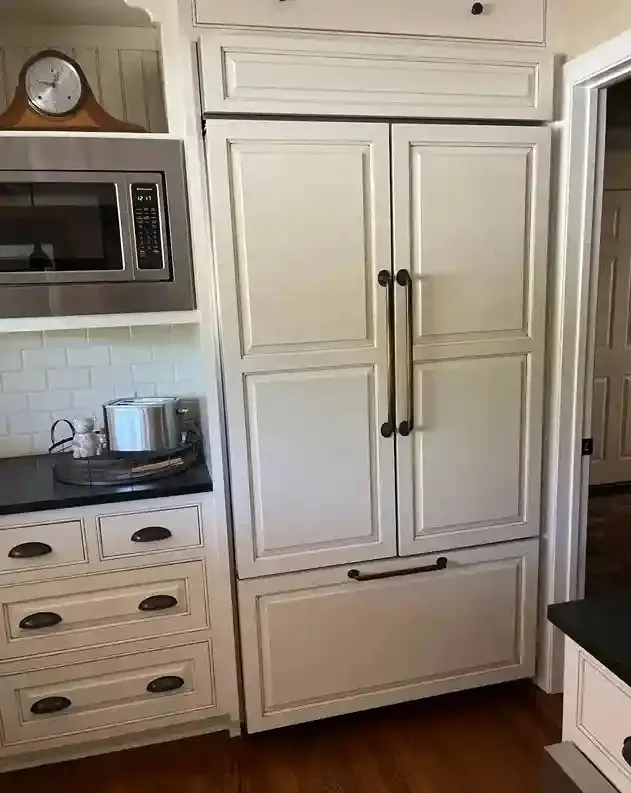
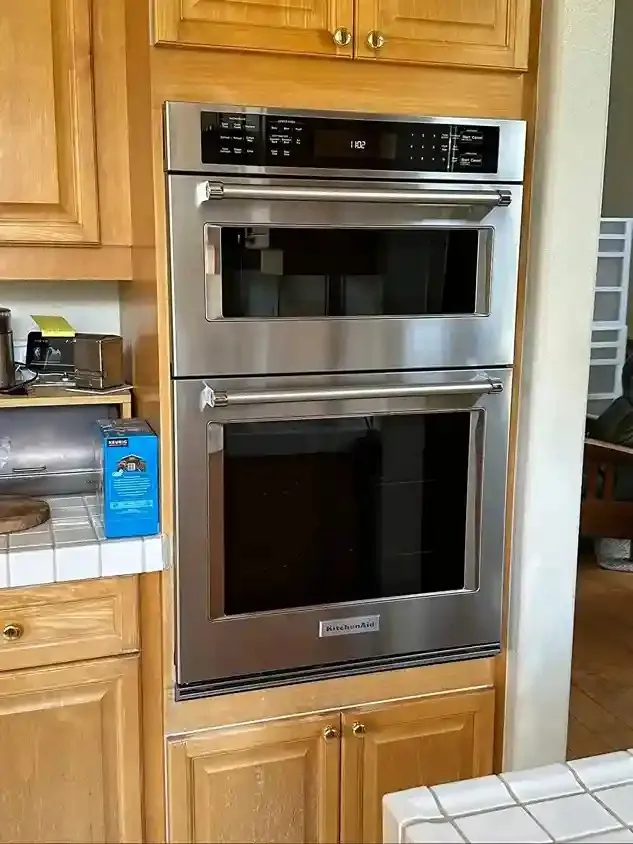
A Thermador gas wall oven that clicks and smells faintly of gas before it catches has a weak igniter. That's a same-day fix in most cases, not a reason to replace the oven. The same goes for a bad bake element, a dark control panel, or a self-clean cycle that leaves the door locked. Camarillo has plenty of these built-in ovens tucked into its kitchens. Mission Oaks tract homes from the mid-century building boom often have a Thermador wall oven built into the original cabinetry. Larger hillside houses in Camarillo Heights and Spanish Hills often run double ovens, or an oven-and-warming-drawer stack, behind panel-ready fronts. Either way, the oven is fixed into the wall. The repair has to work around that cabinetry, not tear the kitchen apart. A technician diagnoses the fault first and quotes the repair in writing. OEM parts go into the internal components that keep these ovens running true. Same-day availability in most cases means a weak igniter, or a locked self-clean cycle, doesn't sit for a week.
Camarillo sits inland enough that salt air isn't the factor it is in Oxnard or Ventura. Summer heat is, though. Hot months push kitchen temperatures up. A Thermador oven's control board and touch panel already sit close to the heat source. Components working that hard fail sooner in a warm kitchen. In Mission Oaks, most wall ovens are original single-oven builds set into a cabinet cutout sized decades ago. A modern replacement oven often won't drop into that existing cutout without carpentry work. That's one more reason repair makes more sense than swapping the unit outright. Camarillo Heights and Spanish Hills homes tend to have larger kitchens with panel-ready ovens finished to match custom cabinetry. Pulling one of those units for a board or element repair means removing trim panels carefully. A careless reinstall leaves gaps, or a scratched finish, that show up later as a separate problem. Camarillo sits roughly twenty minutes down the 101 from our Newbury Park base. That's close enough for same-day or next-day scheduling where the calendar allows.
Common Oven Issues in Camarillo
Oven preheats slowly or never reaches temperature
A Thermador electric wall oven that takes twice as long to preheat usually has a failing bake or broil element. The same fault can show up as a display reading 350°F while the food inside clearly isn't there yet. These elements carry a lot of current. Over time the coil thins out at one weak point. Eventually it glows dim, or opens up completely and trips the circuit mid-cycle. On some models the bake element sits under a hidden floor panel. On others it's exposed at the bottom of the cavity. Either way, a technician needs to know the exact chassis before pulling anything apart. A multimeter check on the element and its wiring confirms the failure in minutes. The fix is a straight swap with an OEM element rated for that oven. A universal part often runs hot or cold in the wrong spot.
Gas burner takes a long time to catch, with a smell of gas first
A slow click, a whiff of gas, then a delayed catch — that's a weakening igniter. It's the classic symptom on a Thermador gas wall oven. The igniter has to glow hot enough to open the gas safety valve before fuel flows. As the element ages it draws less current and gets there slower each time. Left alone, the delay stretches out further. Eventually the igniter stops opening the valve at all, and the burner stays cold. Diagnosis is straightforward. A multimeter checks the igniter's current draw to confirm it's weak. From there it's a straight swap with the OEM igniter built for that burner assembly. This isn't a repair worth putting off. A long gas smell before ignition is a safety concern, not just a cooking inconvenience. It only gets worse with time.
Self-clean cycle ends and the door won't unlock
A self-clean cycle that finishes and leaves the door locked shut is one of the more frustrating built-in oven faults. The oven is unusable for anything until it's fixed. Thermador ovens lock the door during self-clean as a safety measure. A small motor runs the lock, controlled by the same board that runs the touch panel. Heat and repeated clean cycles can make that lock motor stick. Sometimes the board's lock-sensing circuit fails instead and simply won't release the door. The same control board can also cause a dark display, or touch buttons that stop responding. That can happen even outside a clean cycle. Diagnosis means testing the lock motor and the board separately rather than guessing which one failed. Running self-clean less often helps. Wiping the cavity by hand in between is the simplest way to keep this fault from coming back.
Pulling a built-in oven out of a Mission Oaks or Spanish Hills cabinet
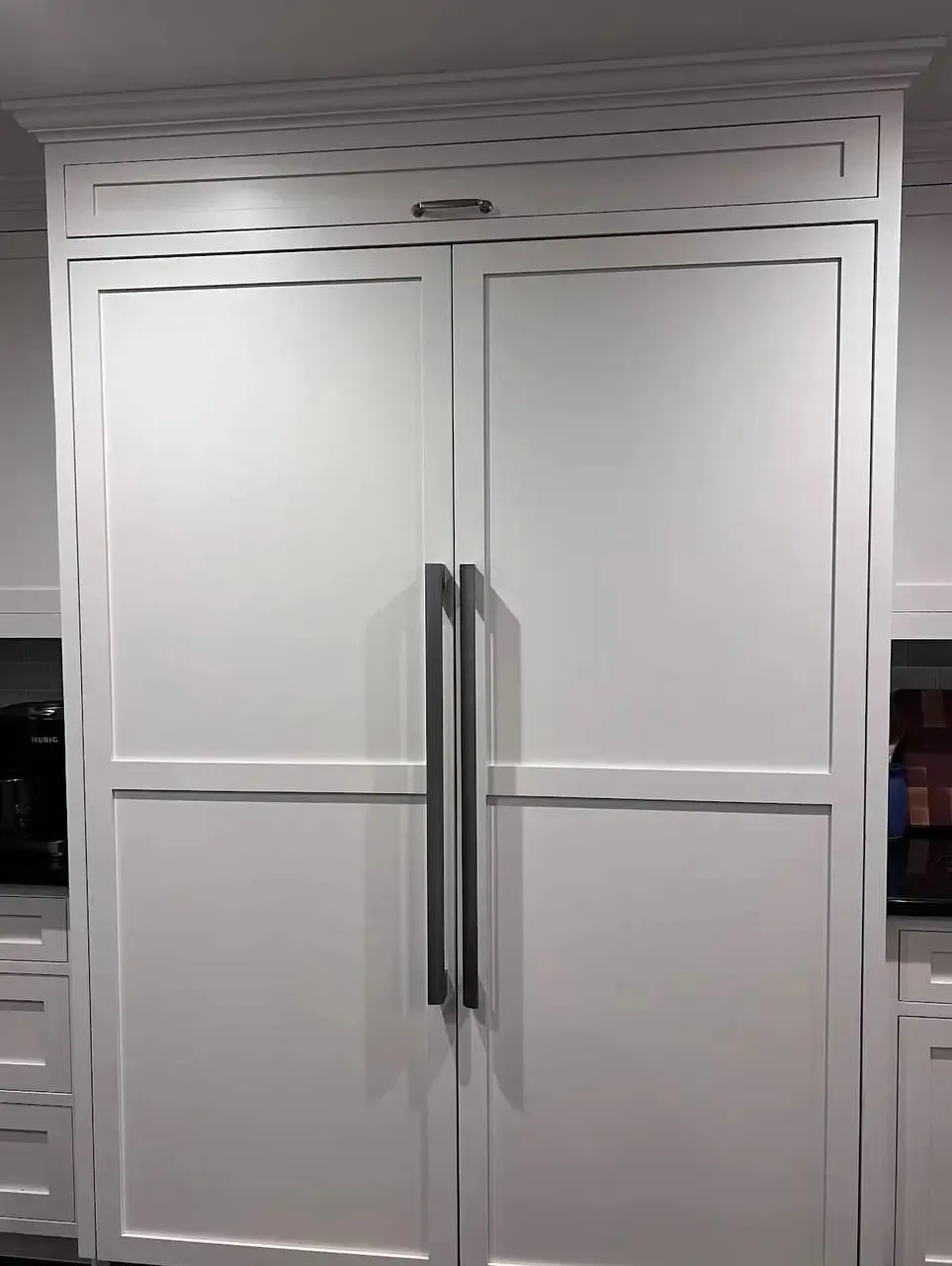
A Thermador wall oven is built into a cabinet cutout, not sitting loose. Most repairs mean sliding it partway, or fully, out of that opening. That's the only way to reach the element, board, or lock motor behind the cavity. In Mission Oaks, that cutout is usually original to a mid-century kitchen. It's sized close to the oven's exact dimensions, leaving little slack to work with. In the larger Camarillo Heights and Spanish Hills homes, the oven often sits behind a panel-ready front matched to custom cabinetry. That trim has to come off cleanly before the oven can move at all. A rushed reinstall causes its own problems later. A pinched wire. A door that doesn't sit flush in its hinges. A trim panel screwed back on slightly off. Any of those can show up as a new fault, one that traces back to how the oven was put back together, not the original repair.
Repair or replace: what makes sense for a Thermador oven this age
Thermador ovens are built to last. The cabinetry around them is built to fit that exact unit. Replacing one is rarely as simple as buying a new oven. A wall oven swap often means new trim, or cabinetry work, to match a different model's dimensions. That adds cost beyond the appliance itself. That math tips most owners toward repair, especially for element, igniter, and control board faults. Those are component-level fixes, not signs the oven is worn out structurally. Replacement starts to make more sense once the same part has failed more than once. It also makes sense when a unit is old enough that sourcing parts gets harder than the cost justifies. A bake element or igniter swap on a Thermador oven typically runs in the low-to-mid hundreds of dollars for parts and labor in this area. Control board work runs higher. Call for an exact quote once the fault is diagnosed. Wiping the door gasket and running self-clean less often helps keep these faults from starting in the first place.
Frequently Asked Questions
Camarillo sits roughly twenty minutes from our Newbury Park base down the 101. That's close enough to be a normal stop on the route through Mission Oaks, Camarillo Heights, and Spanish Hills. Same-day availability applies in most cases. Next-day slots fill in when the schedule is already full. A technician diagnoses the oven first and gives a written quote before any repair starts. No surprises once the job is underway. Call (805) 500-2705 to check what's open today. Evening appointments are sometimes available too, depending on the day's schedule.
Cost depends on which part failed and how much access it takes to reach it. A bake or broil element, or an igniter swap, tends to be the least expensive repair. It's a single component replacement. Control board and touch panel repairs cost more. The board itself is a pricier OEM part, and it takes longer to confirm as the actual fault. As a general range, element and igniter repairs on Thermador ovens here typically run in the low-to-mid hundreds of dollars. Board work runs higher. Call for an exact quote once the diagnostic confirms the fault.
Thermador sources parts through the same manufacturer network across its wall oven lineup. Most components — elements, igniters, control boards, door lock motors — stay available well after a unit is a few years old. OEM parts matter more on a Thermador oven than on a basic range. Tolerances on a built-in unit are tighter. A generic element or sensor can throw off calibration, or simply not fit the mounting points. Parts get sourced and confirmed during the diagnostic visit, before the job is quoted. On the rare occasion a part is genuinely discontinued, that gets flagged upfront rather than ordering something that won't hold up.
That's almost always calibration drift, not a broken oven. The sensor and control board still work. What's changed is the offset between the displayed setpoint and the actual cavity temperature. That drift can follow a control board repair, or just years of normal cycling. Most Thermador ovens have a hidden calibration adjustment reachable through the control panel. A technician checks the real cavity temperature against a separate thermometer, then dials the offset back to true. If that doesn't close the gap, the temperature sensor itself is the more likely failure and needs replacing.
For most faults — a bad element, a weak igniter, a failed control board — repair is the more sensible option. That's especially true on a built-in unit, where the surrounding cabinetry was cut to fit that specific oven. Replacing a panel-ready or built-in Thermador oven usually means matching trim, cutout dimensions, and sometimes cabinetry work. That adds cost well beyond the appliance itself. Repair makes less sense only when a unit has failed repeatedly on the same part, or is old enough that sourcing parts becomes the real obstacle. A diagnostic visit gives a straight answer either way, with a written quote before committing to anything.
Yes. Camarillo is one stop on a route that also covers Thousand Oaks, Newbury Park, Moorpark, Oxnard, and Ventura. That's alongside the rest of Ventura County and the western edge of Los Angeles County. Scheduling works the same way across all of it. Same-day availability applies in most cases, with next-day slots when the calendar is full. A written quote follows the diagnostic visit, before any repair starts. A call from Spanish Hills or Camarillo Heights gets the same response as one from Mission Oaks. Call (805) 500-2705 to get on the schedule.