Refrigerator Ice Maker Not Working? Causes, Resets and When to Call
Most ice makers stop because the ice maker is switched off, the freezer is too warm, or water is not reaching it through a closed valve, kinked line, old filter or frozen fill tube. If those check out and a reset or test cycle does nothing, the water inlet valve or the ice maker itself has likely failed.
Updated November 16, 2026
Quality Service for Major & Luxury Brands


The bin is empty, the cubes come out small or hollow, or the tray spills water into the bucket.
An ice maker needs three things. Power and an on signal, a cold enough freezer, and a steady supply of water. Nearly every ice problem comes down to one of those, or to a worn part along the way. Below are the causes, what overflowing and hollow cubes mean, brand reset steps from the manufacturers' own support pages, and when to call.
How a refrigerator ice maker works
Water from your home's supply line enters the refrigerator through the water inlet valve, an electric valve at the back of the unit that opens to let water in. The water passes through the filter, then up a small fill tube into the ice mold. Once the mold is cold enough, the cubes drop into the bin and the mold refills. On GE models, for example, the mold has to reach 16 degrees F before a cycle starts.
A wire arm or a sensor signals when the bin is full. When the arm is raised or the sensor is blocked, production pauses, which is normal. When it is stuck in that position, production stops for good.
Ice maker not working? Start with the simple causes
Most of these checks take a few minutes and need no tools.
- It is switched off. Look for an ice button on the control panel, a switch on the unit itself or a wire arm that stops production when it is raised. New refrigerators often arrive with ice turned off.
- Something holds the arm up. A bag of frozen peas, a stray cube or a bin that is not pushed all the way in can keep the arm raised, so the machine thinks the bin is full.
- The freezer is too warm. Ice needs a freezer at about 0 degrees F. A door that does not close fully, or food stacked against it, lets warm air in and slows everything down.
- The water valve is closed. The shutoff behind the refrigerator or under the sink should be fully open. Older homes sometimes have a saddle valve clamped onto a copper pipe, and Whirlpool advises against that type because it restricts flow and clogs easily.
- The line is kinked. Pushing the refrigerator back after cleaning behind it can pinch the thin water line.
- The filter is overdue. Most makers suggest a new filter about every six months. A clogged filter starves the ice tray before the water dispenser feels weak.
- The fill tube is frozen. The short tube that carries water into the mold can freeze shut. A clue is that the water dispenser still works while the tray stays dry.
- Water pressure is low. Refrigerators are built for normal household pressure, roughly 30 to 120 psi for Whirlpool and KitchenAid models. A reverse osmosis system under the sink can drop it below that.
- Ice is fused in the bucket. Cubes that melt a little and refreeze turn into one block. Pull the bin, break the ice apart and throw out the clumps.
If everything above checks out, two parts are left. The water inlet valve can stop opening, or its small screen can clog. The ice maker module, the motor and control unit that fills the mold and pushes out the cubes, can also wear out.
Ice maker pouring water into the tray or overflowing
Water spilling over the tray, icicles hanging from the unit or cubes frozen into one solid sheet in the bucket all point to too much water reaching the mold.
Pressure that is too high is a common cause. LG, for one, puts the safe range at 20 to 120 psi. The fix is to partly close the supply valve to the refrigerator, or have a pressure regulator installed. Ranges differ a little by brand, so check the figure in your manual.
An inlet valve that does not close fully keeps dripping water into the mold after the fill. A cube stuck in the mold can make the next fill run over. Pressing the test button again and again while the tray still holds water or ice can also flood it.
On a brand new unit, a slight overfill during the first few cycles is normal.
Small, hollow or slow ice cubes
Small, hollow or oddly shaped cubes, together with a slow water dispenser, usually mean water is not arriving fast enough.
The usual reasons are a clogged filter, a kinked or narrow line, a supply valve that is only partly open or a reverse osmosis tank that has run low. If your refrigerator came with a filter bypass plug, there is an easy test. Remove the filter, put the plug in and try the dispenser. If the flow gets stronger, the filter was the problem.
If the filter and line are fine and the cubes stay small, the inlet valve screen may be partly blocked with scale, or the valve may be weak.
Brand reset and test steps
These steps come from each manufacturer's support pages. Button locations vary by model, so check your manual.
- LG. Press and hold the test button or recessed test switch on the lower left side or front of the ice maker for 3 seconds. If you cannot find it, unplug the refrigerator or turn off its breaker, wait at least 3 minutes and restore power.
- Samsung. On models with the ice maker in the fridge compartment, remove the ice bucket and press and hold the Test button on the right side of the ice maker until you hear a chime. One chime means it passed the test. Several chimes mean it needs service. If there is no chime and no movement, unplug the refrigerator or turn off the breaker for 2 minutes and try again.
- GE. GE does not describe a reset button for this case. Its test is to pour about 4 ounces of water into an empty ice mold and wait about 2 hours. If the cubes get pushed out, it is working. GE Monogram owners can start with the same checks, and the GE Monogram repair page covers that line.
- Whirlpool and KitchenAid. Whirlpool's support pages say to press and hold the ice maker reset button for a few seconds if your model has one. Without a button, unplug the refrigerator for 1 minute, then plug it back in. See KitchenAid refrigerator repair for built-in models.
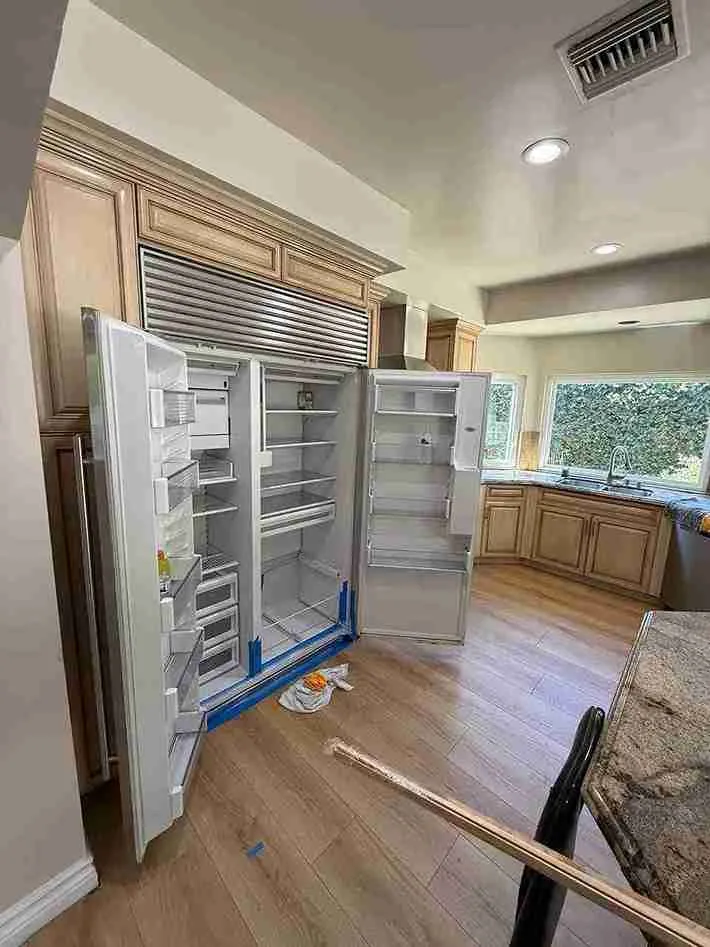
- Sub-Zero. Check that the ice maker is on, the freezer is at or below 5 degrees F and the shut-off arm is down. If the arm is up, turn the unit off and push the arm down gently. It moves only about an inch. After clearing any jam or frozen fill tube, turn the ice maker off and back on to reset it, then wait 24 hours. The Sub-Zero repair page has more on these units.
What to check, step by step
Confirm the ice maker is on
Look for an ice button on the control panel, a switch on the ice maker or a wire arm. Lower the arm if it is raised.
Check the freezer temperature
Set the freezer to 0 degrees F if your controls show temperature. Make sure the door closes fully and nothing blocks it. Give the freezer about 24 hours to settle after any change.
Clear the bin and the arm
Remove the bucket, discard clumped ice and make sure nothing holds the arm. Reseat the bucket so it sits level.
Check the water supply
Make sure the shutoff valve is fully open and the line behind the refrigerator is not kinked. If the dispenser also runs slowly, the problem is before the ice maker.
Replace an old water filter
If the filter is six months old or more, replace it. Then run water through the dispenser to clear trapped air, following your manual.
Look for a frozen fill tube
If the dispenser works but the ice maker gets no water, the fill tube may be frozen. Some manufacturers send a technician for this, since the ice maker may need to come out.
Run the reset or test cycle
Use your brand's test button or power reset from the section above, then wait the time your manufacturer gives before judging the result.
Error codes that point to this problem
| Code | Meaning | What to do |
|---|---|---|
| gF | On some older LG models with a twist ice tray, this shows a problem with the flow sensor that measures water going to the ice maker. | LG's steps are to partly close the water supply valve, then press and hold Ice Plus and Freezer Temp together. If gF appears in the display, the refrigerator needs service. |
Code and steps come from the LG owner support page on an ice tray overfilling with water.
When to call a technician
Call for service when the ice maker is on, the freezer is cold, water reaches the refrigerator and a reset or test cycle still produces nothing. Also call when the tray keeps overflowing after you lower the pressure, when the ice maker hums without moving, or when water reaches the floor.
Airtexno Appliance Repair answers the phone 24/7 at (805) 500-2705, offers same-day visits in most cases, and the service call is $95. You can also book through the contact page.
Repair or replace?
An ice maker problem alone is rarely a reason to replace a refrigerator. The inlet valve and the ice maker module are separate parts, and the rest of the refrigerator keeps working while they fail. The repair cost depends on the part and the model, so call for a quote after the diagnosis.
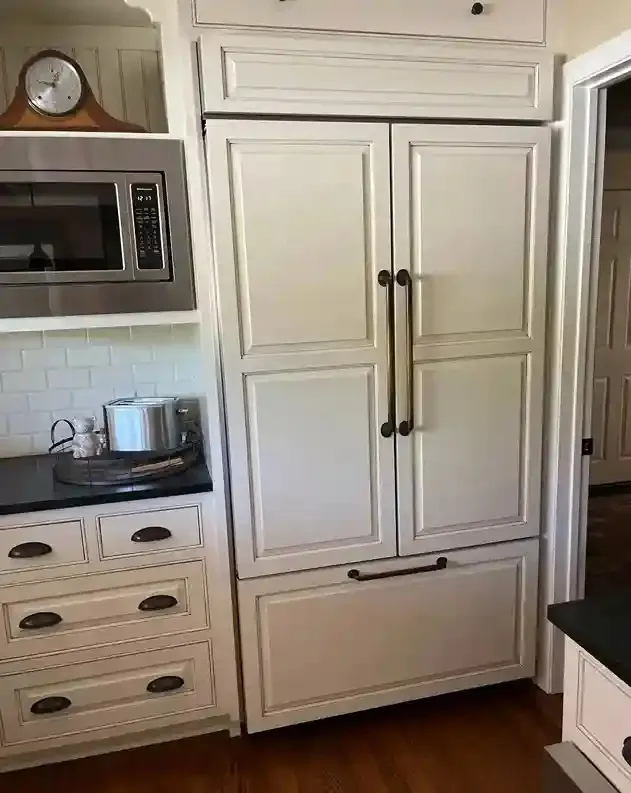
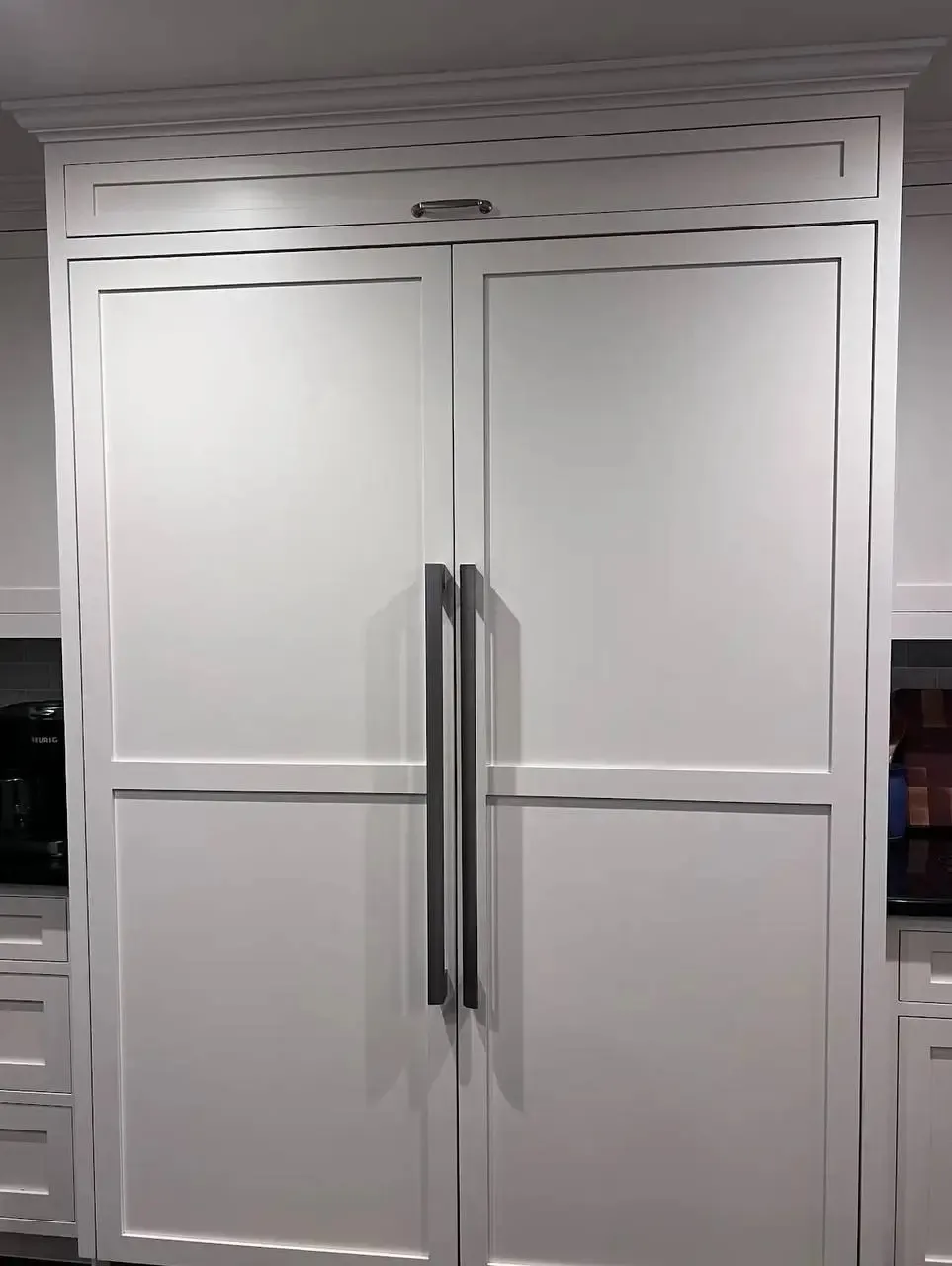
Replacing the refrigerator makes more sense when the ice problem comes with other faults, such as poor cooling, or when the unit is near the end of its working life. Built-in refrigerators are usually worth repairing, since a new one has to fit the same opening. Read more about refrigerator repair. Repairs come with a workmanship warranty of up to one year.
Local notes: Thousand Oaks and Ventura County
Much of the water in Ventura County is hard. The City of Camarillo's 2024 water quality report lists average total hardness of 168.4 ppm, with a range of 78 to 354 ppm, for city well water including the desalter, which supplies about 62 percent of the city's water. Cal Water's 2024 report for its Westlake District, which serves Westlake Village in Thousand Oaks with imported water through Calleguas Municipal Water District, lists average hardness of 148 ppm for water from the MWD Jensen Plant and 163 ppm for Calleguas MWD. The U.S. Geological Survey classes 121 to 180 mg/L as hard.
Hard water carries calcium and magnesium that leave scale behind, and Cal Water notes it can cause mineral buildup in pipes and water heaters. In a refrigerator, the same minerals can collect in the small screen of the water inlet valve and shorten filter life, which slows the fill and leads to small cubes. Across Ventura County, changing the filter on schedule is the simplest way to protect the ice maker.
Refrigerator and ice maker repair in Thousand Oaks and Ventura County
A diagnostic visit with a written estimate before any work. The $95 service call is credited toward the repair, with same-day availability in most cases.
See the repair pageSources: lg.com, lg.com, samsung.com, products.geappliances.com, products.geappliances.com, products.geappliances.com, producthelp.whirlpool.com, producthelp.whirlpool.com, producthelp.kitchenaid.com, producthelp.whirlpool.com, subzero-wolf.com, cms7files.revize.com, calwater.com, usgs.gov
Frequently Asked Questions
Check that the ice maker is on, the freezer is cold, the water valve is open and the filter is under six months old. Then hold the test button for 3 seconds. If nothing moves or no water arrives, it needs service.
High water pressure is a common cause, so try partly closing the supply valve. A leaking inlet valve or a cube stuck in the mold can also overfill the tray.
Many models have a test or reset button on the ice maker that you press and hold for a few seconds. If yours has none, unplug the refrigerator or turn off its breaker for a few minutes, then restore power and wait up to 24 hours for ice.
They usually mean low water flow. Replace an old filter, check the line for kinks and open the supply valve fully. If that fails, the inlet valve may be clogged.
Check that the ice maker is on, the freezer is at or below 5 degrees F, the shut-off arm is down and the fill tube is not frozen. Then turn it off and on and wait 24 hours.
Plan on about a day before the first cubes. A new unit can need up to 24 hours to get cold enough, and filling the bin completely can take two to three days.
Usually yes. The inlet valve and ice maker module are replaced on their own. The cost depends on the part, so ask for a quote after the diagnosis.