Should You Repair or Replace a Broken Appliance?
Repair the appliance if it is younger than about half of its typical service life and the repair costs less than half the price of a comparable new unit. If it is near the end of its expected life or the repair runs past that half mark, buying new usually makes more sense.
Updated October 30, 2026
Quality Service for Major & Luxury Brands


A refrigerator that stops cooling or a washer that will not drain forces a quick decision. Spend money on the old machine, or put it toward a new one? The answer depends less on how the breakdown feels and more on two numbers you can find in a day.
This guide covers those two numbers, the typical life of each major appliance, the cases that tip the choice either way and the costs of a new unit that never show on the price tag.
The two numbers that decide it
The first number is age against typical service life. An appliance in the first half of its expected life still has years of work left after a repair. One in its final years may need another repair soon, because its other parts have worn just as long.
The second number is the repair estimate against half the price of a comparable new unit. Comparable means the same size, type and features, not the least expensive model on the floor. Under that half mark, fixing usually wins. Over it, a new unit usually gives more years of use for the money.
Neither number works alone. A small repair on a very old machine can still go to a unit that fails again within months. A large repair on a young built-in refrigerator can still be sensible, since a new one brings installation and cabinetry work. Safety problems override the rule entirely.
Typical service life by appliance
The NAHB and Bank of America Home Equity "Study of Life Expectancy of Home Components" (2007, based on first-owner use) lists a typical figure per appliance, and the InterNACHI estimated life expectancy chart gives ranges for several of them. Together they show the following:
- Refrigerator, about 13 years in the NAHB study and 9 to 13 years in the InterNACHI chart.
- Freezer, about 11 years in the NAHB study and 10 to 20 years in the InterNACHI chart.
- Dishwasher, about 9 years in both sources.
- Washer, about 10 years in the NAHB study and 5 to 15 years in the InterNACHI chart.
- Dryer, about 13 years in both sources.
- Range or oven, about 13 years for an electric range and 15 for a gas range in the NAHB study, with 13 to 15 and 15 to 17 years in the InterNACHI chart.
- Microwave, about 9 years in both sources.
- Garbage disposal, about 12 years in both sources.
These are averages, not expiry dates. Heavy use and skipped maintenance shorten them, while regular care, such as a clean condenser coil or a clear dryer vent, can stretch them.
When repair is the right call
Repair usually makes sense when:
- The appliance is in the first half of its typical life.
- One part failed and the rest of the machine is sound, such as a drain pump, door lock, igniter, fan motor or water valve.
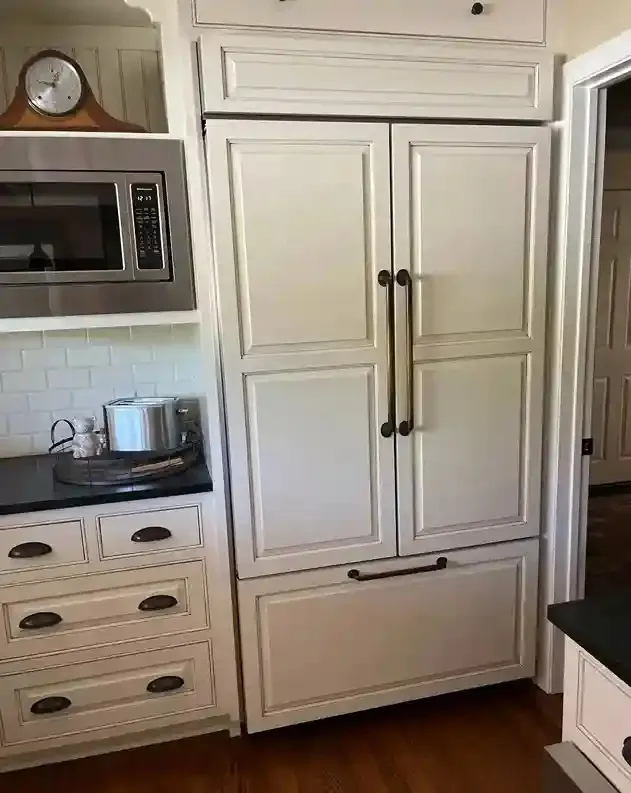
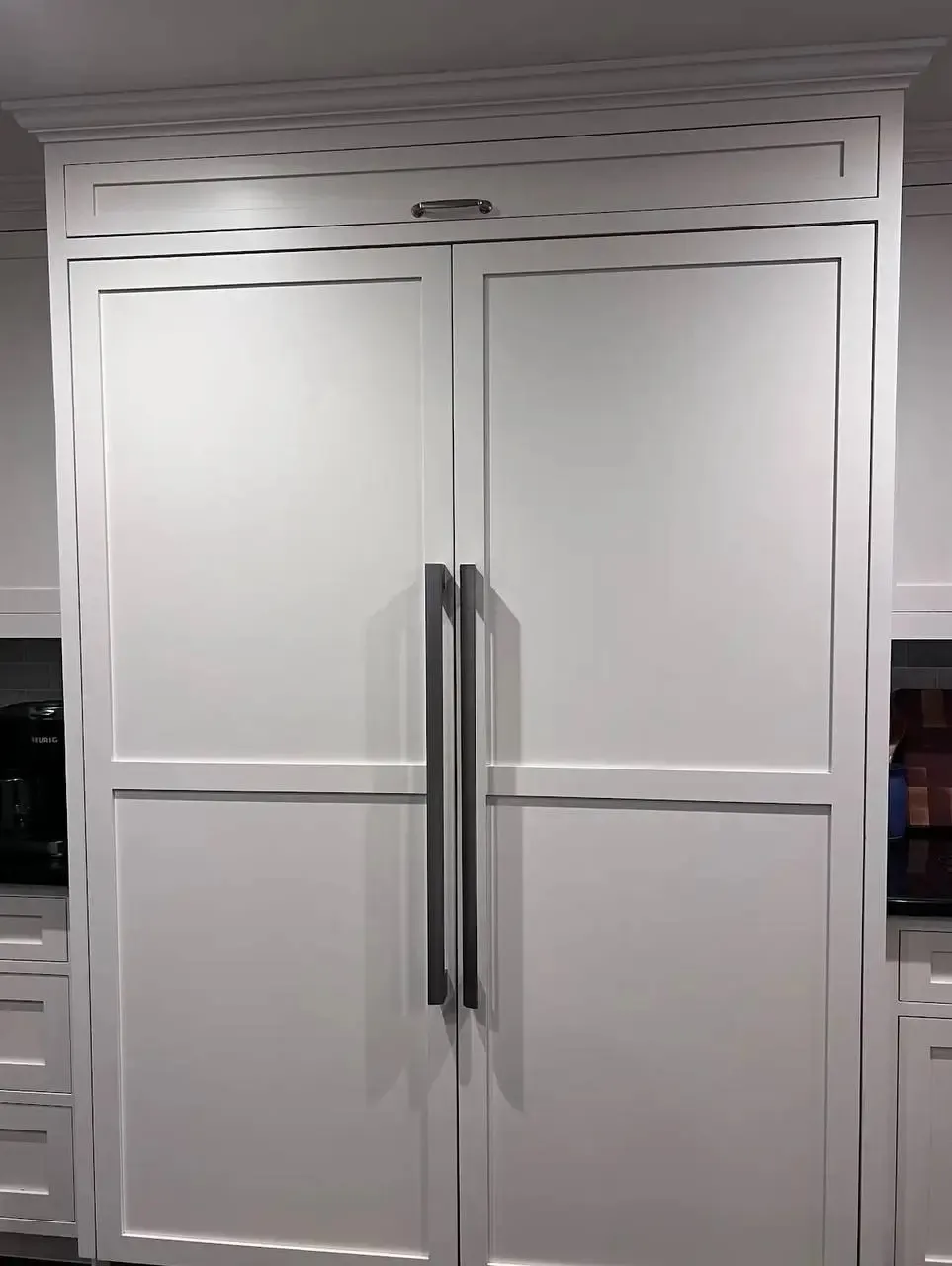
- It is a built-in or panel-ready unit that fits an exact opening and trim.
- It belongs to a matching set that a new unit would break up.
- Its dimensions are no longer made, so a new model would need cabinet changes.
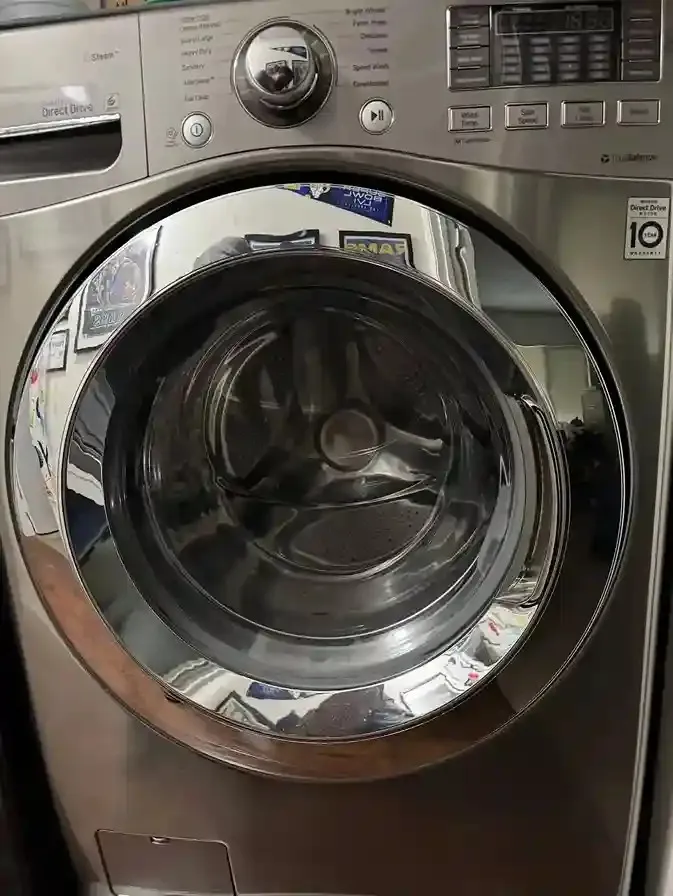
The washer repair and dryer repair pages describe single-part faults that usually land on the repair side.
When replacement is the right call
Some failures point toward a new appliance, especially on older units:
- A failed compressor or a sealed-system leak in a refrigerator or freezer past the middle of its life.
- A cracked outer tub or worn drum bearings on an older washer.
- A control board the manufacturer no longer makes, with no tested substitute.
- The third or fourth repair in a short span, a sign the machine is wearing out part by part.
- A safety problem, such as a gas smell from a range, scorched wiring, a refrigerator that trips the breaker or a dryer that overheats after the vent has been cleared.
With any safety issue, turn the appliance off at the breaker or gas valve and stop using it while you decide.
Premium and built-in brands change the math
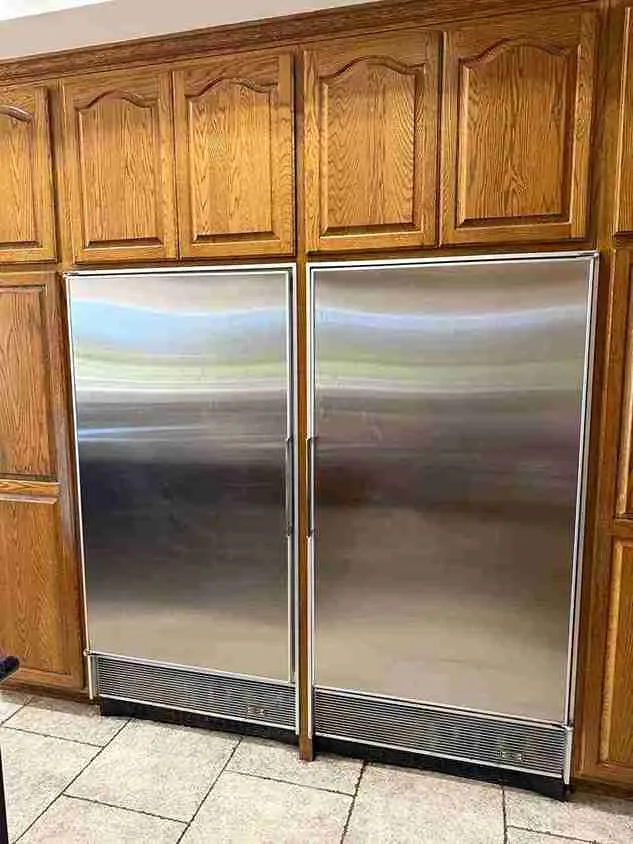
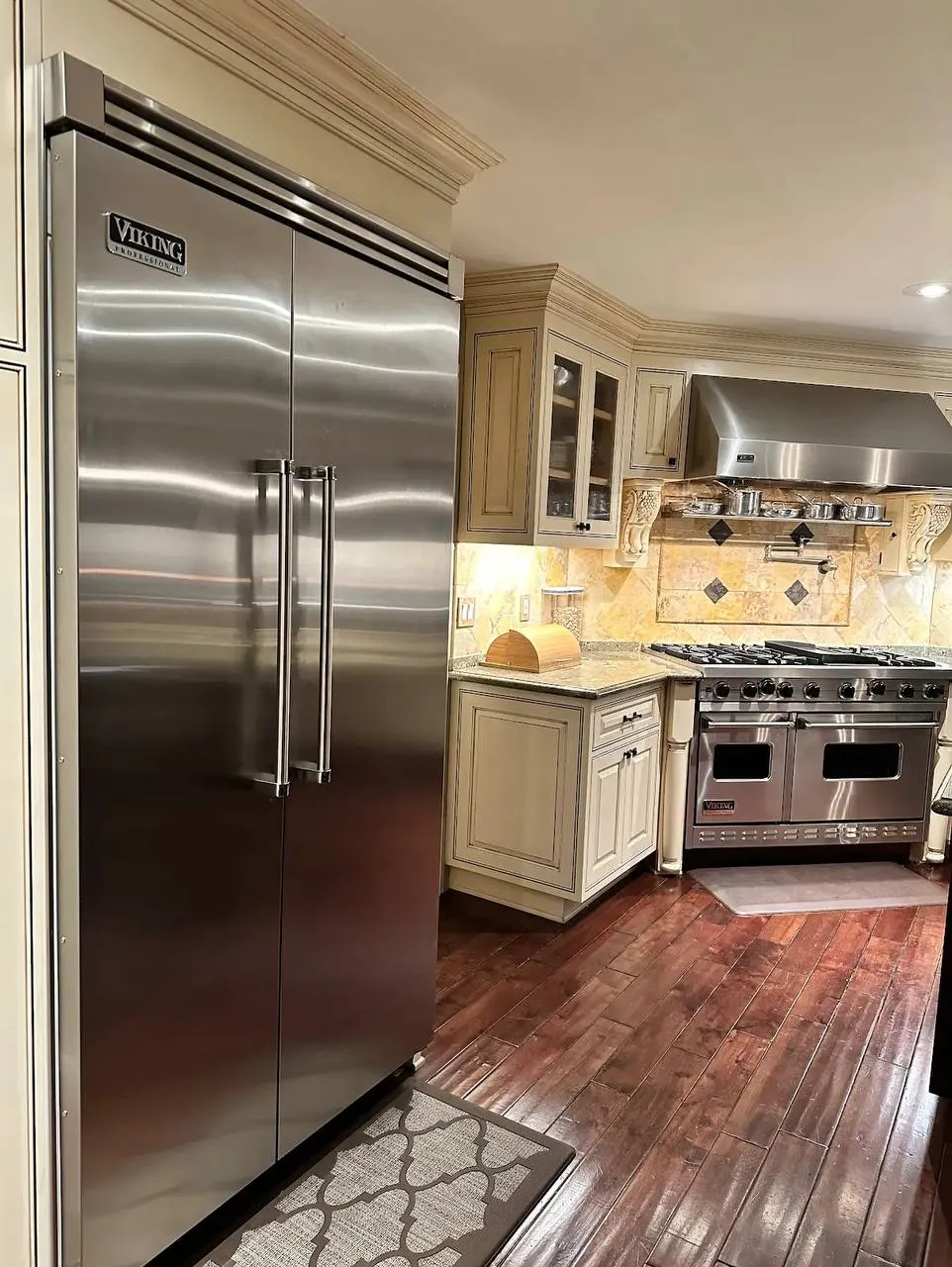
Sub-Zero, Thermador, Viking, Wolf and Miele appliances are designed for a longer working life than standard models, and many are installed as built-in or panel-ready units. A twelve year old unit may still have plenty of life in its cabinet, controls and sealed system. A new one has to match the exact width, height and depth of the opening, plus custom panels and trim.
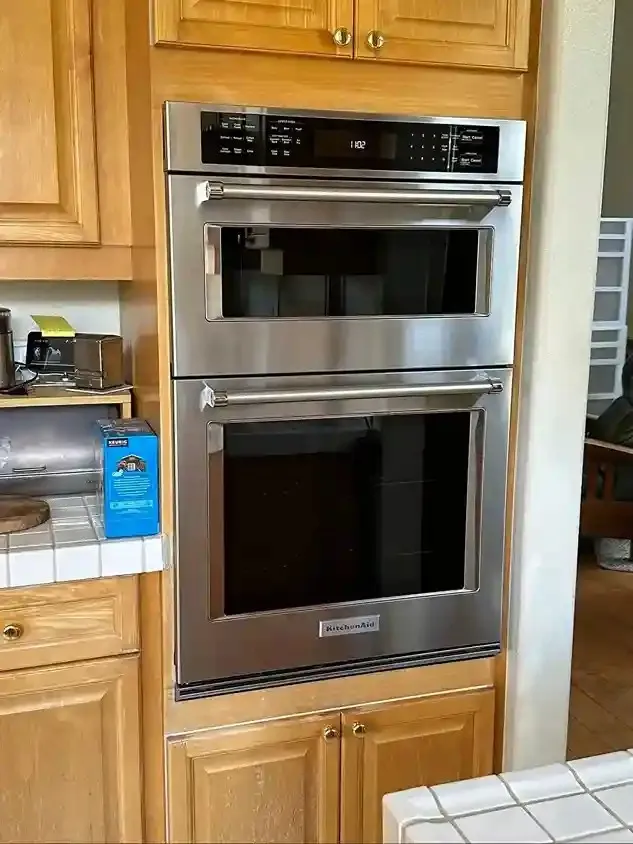
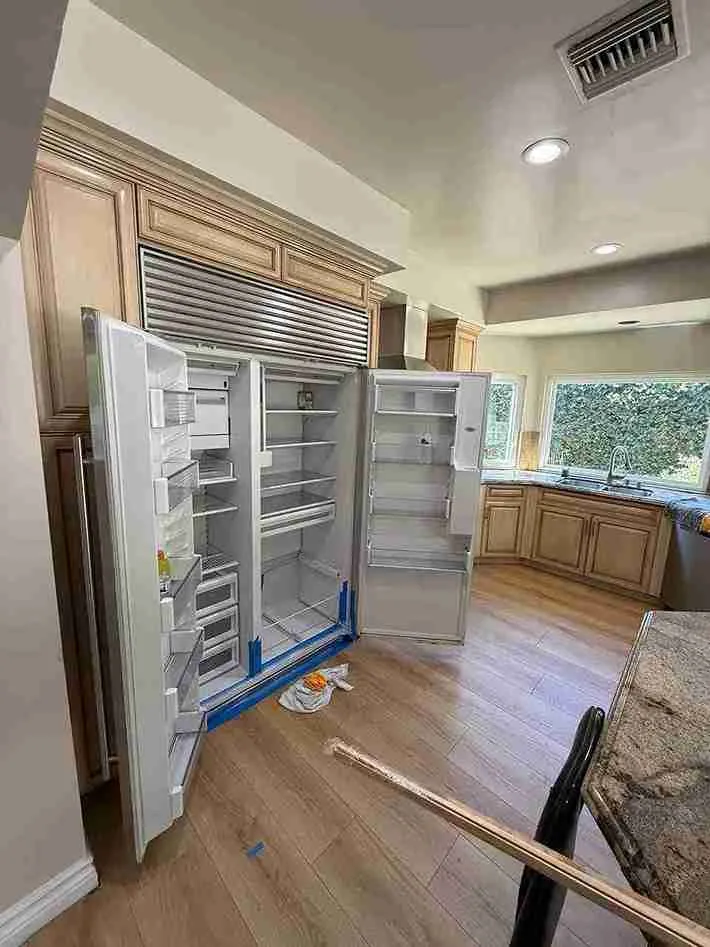
Fans, sensors, igniters, valves and controls on these brands are usually ordinary repairs, so a fault that would retire a freestanding refrigerator is often worth fixing on a built-in. See refrigerator repair, the Sub-Zero repair page and oven repair for Thermador, Viking and Wolf ranges and wall ovens.
What a replacement really costs beyond the price tag
Before comparing a new appliance to a repair estimate, add:
- Delivery, and sometimes a fee for stairs or a tight path into the kitchen.
- Installation, including new water lines, drain hoses or a gas connector.
- Electrical or gas work if the new model needs a different outlet, circuit or line.
- Trim kits, panels and cabinetry changes for built-in units.
- Haul-away of the old appliance.
- Days without the appliance while the new one ships.
For a freestanding washer these extras may be small. For a built-in refrigerator or wall oven they can approach the price of the appliance itself.
How to get a straight answer
Start with a diagnostic and a written estimate before any work. At Airtexno Appliance Repair, every visit begins that way, and the $95 service call is credited toward the repair if you go ahead.
Then ask the technician three things. Which part failed, and is it the cause or a symptom? Is the part available, and how soon? What shape is the rest of the machine in, including the motor, seals, bearings and controls? Those answers, with the age and the estimate, settle most decisions.
How to decide, step by step
Find the age on the serial plate
Look for the model and serial sticker inside the door, under the lid or on the back panel. Many brands encode the build date in the serial number, and the manufacturer or a technician can read it.
Look up the typical service life
Compare the age to the ranges above. Note whether the appliance sits in the first half of its life, the second half or past the typical range.
Get a written estimate
Book a diagnostic and ask for the estimate in writing with the failed part named. Ask whether anything else is close to failing.
Compare it to half of a comparable new unit
Price a new model of the same size, type and features. If the repair is under half of that price and the appliance is not near the end of its life, repair usually wins.
Add the hidden costs of replacing
Add delivery, installation, electrical or gas changes, trim or cabinetry work and haul-away to the new price. For built-in appliances this step often changes the answer.
Decide
If a safety issue is present, keep the unit off until it is fixed or replaced. Otherwise, choose the option that gives more years of use for the money.
When to call a technician
Call for a diagnostic as soon as an appliance stops doing its main job, leaks, trips a breaker, smells of gas or burning, or shows an error code that a reset does not clear. A written estimate is the only way to put a real number into the decision, and waiting can turn one failed part into two. To schedule a visit, use the contact page.
Repair or replace?
Repair when the appliance is in the first half of its typical life, one part has failed, the estimate is under half the price of a comparable new unit, or it is a built-in that would need cabinetry work to replace. Replace when it is near or past its typical life and the repair is large, when the sealed system, tub or bearings have failed on an older unit, when parts are no longer made, when repairs keep repeating, or when there is any safety risk.
Local notes: Thousand Oaks and Ventura County
Much of the local housing is older than the appliances inside it. According to the U.S. Census Bureau's 2024 American Community Survey, about 87 percent of homes in Thousand Oaks and about 81 percent across Ventura County were built before 2000, with a median year built of 1978 in Thousand Oaks and 1977 countywide. In a kitchen or laundry room updated over the years, cabinet openings may be sized for one specific model, so measure carefully before buying new and give a repair more weight if a new unit would not fit. Airtexno serves Thousand Oaks, Newbury Park, Camarillo, Oxnard, Ventura, Simi Valley, Moorpark, Westlake Village, Agoura Hills, Calabasas and the rest of Ventura County, with same-day visits in most cases.
Book a diagnostic visit in Thousand Oaks and Ventura County
A diagnostic visit with a written estimate before any work. The $95 service call is credited toward the repair, with same-day availability in most cases.
Request serviceSources: hcmuddox.com, web.archive.org, api.censusreporter.org, api.censusreporter.org
Frequently Asked Questions
Repair is usually better when the appliance is in the first half of its typical service life and the repair costs less than half the price of a comparable new unit. Replacement makes more sense for an older unit facing a major repair, repeated breakdowns or a safety problem.
If a repair costs more than half the price of a comparable new appliance, buying new is usually the better value. The rule works best combined with age, since a small repair on a very old unit can still be a poor investment.
Often, yes, for a single part such as a fan, defrost component or water valve. A standard refrigerator is in its later years at that age, so a compressor or sealed-system failure usually tips the decision toward a new one. A built-in refrigerator at ten years is usually worth fixing.
A dryer that age is past its typical life of about 13 years. A belt, heating element or thermal fuse can still be a reasonable repair. If several major parts are worn, or the dryer overheats after the vent has been cleaned, replacement is the safer choice.
In most cases, yes. Sub-Zero units are built-in and designed for a long life, so replacing one means matching the opening, panels and trim as well as buying the appliance. Even a larger repair on an older unit is worth pricing before you decide.
Many breakdowns come down to one part on an otherwise sound machine, and those are worth repairing. Buy new when the unit is near the end of its typical life and needs a major repair, or when parts are no longer available.