Dishwasher Not Draining? Causes, Safe Fixes and When to Call
A dishwasher that will not drain is usually blocked by a clogged filter, a kinked drain hose, a plugged air gap or a disposal knockout plug left in place. If all of those are clear, the drain pump, check valve or control is the likely fault.
Updated October 30, 2026
Quality Service for Major & Luxury Brands


You open the door after a cycle and find gray water in the bottom of the tub, with or without a code on the display.
This almost always comes down to one blockage or one part. Water leaves through a short path, from the filter to the pump, then through the hose to the sink drain or disposal.
Below are the causes, how to read the symptom, safe steps to try, brand error codes, and when to call.
Why a dishwasher stops draining
From most to least common:
- Filter and sump debris. Food, labels and glass pack the filter and slow water to a trickle.
- A kinked or clogged drain hose. Something stored under the sink pinches it, or grease builds up inside.
- A plugged air gap. Debris in the small cap next to the faucet blocks the line, and water often spills out of it.
- The disposal knockout plug. A new disposal ships with a plug sealing its dishwasher inlet. If it was never removed, the dishwasher cannot drain from the first load.
- The check valve. This flap lets water out and keeps it from flowing back. Stuck shut, it holds water in the tub.
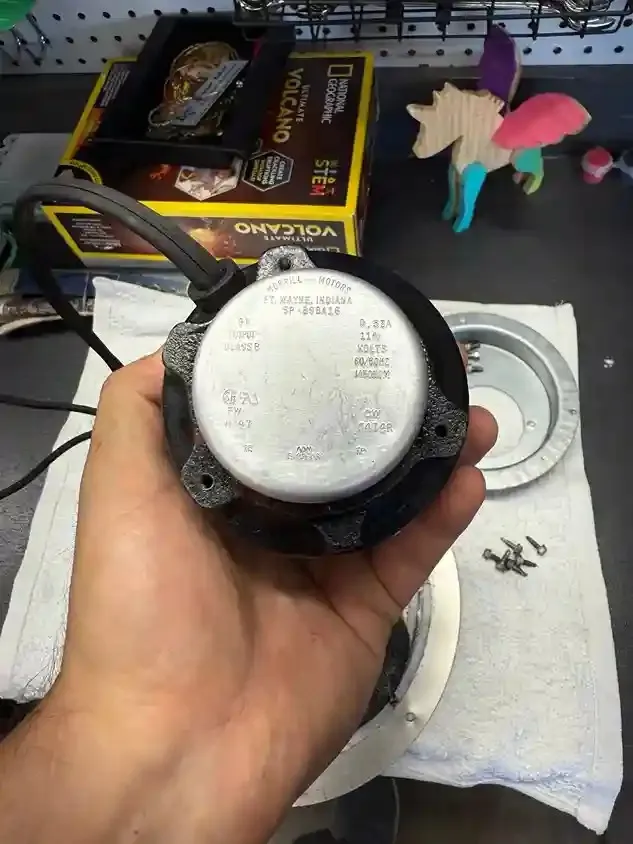
- The drain pump. Glass or a fruit pit can jam the impeller, or the motor wears out. A hum with no water moving is the classic sign.
- The control or float switch. If the board or a stuck float never signals the pump, it never runs.
Standing water after the cycle vs. draining slowly
First check how much water is left. GE notes that a cup or two at the bottom is normal on models without an ultra-fine filter.
If water covers the floor of the tub, the drain has stopped. Look first for a full blockage, such as a packed filter, a knockout plug or a crushed hose, then for a pump that is not running.
If it drains slowly or only partway, the path is narrowed. A partly clogged filter, a sagging hose, a dirty air gap or a slow sink drain are the usual reasons. Too many suds from dish soap can also slow it.
When the drain is clear but the water still stays
If the filter, hose, air gap and disposal all check out, the problem is inside the machine.
Listen during the drain. A hum with no water moving usually means a jammed impeller or a failing pump motor. Silence suggests the pump gets no power or signal, which leads to the wiring, float switch or control board. A pump that runs while the tub stays full often points to a stuck check valve.
Some older dishwashers have no separate drain pump. One motor washes and drains, and a solenoid opens a drain valve. When that solenoid fails, the water has no way out. Each of these needs testing with a meter.
What a repair visit looks like
The technician checks the drain path, runs a drain test, then tests the pump, valve and control. You get a written estimate before any work begins.
The $95 service call is credited toward the repair if you go ahead, and same-day visits are available in most cases. Book through the contact page, or read more about dishwasher repair.
What to try before you call
Turn off the power
Switch off the breaker, or unplug the dishwasher if the plug is under the sink. Then scoop out standing water with a cup and soak up the rest with a towel.
Remove and rinse the filter
Most filters twist out from under the lower spray arm. Rinse it under warm water with a soft brush, check the opening below for glass or labels, and lock it back in firmly.
Check the drain hose
Follow the hose under the sink. It should rise in a high loop toward the underside of the counter before dropping to the drain. Straighten kinks and move anything pressing on it.
Clean the air gap
If there is a small cap next to the faucet, pull it off and clear the debris inside with a bottle brush. Replace the cap when the opening is clear.
Check the disposal and knockout plug
Run the disposal with cold water for a few seconds. If it is new and the dishwasher has not drained since, the knockout plug may still be in place. Removing it means taking the hose off, so book a garbage disposal visit if you prefer.
Run a drain or cancel cycle
Restore power and press Cancel or Cancel/Drain, or run a short rinse. Watch whether the water drops within a couple of minutes.
Use only mild cleaners
For a slow drain, a cup of white vinegar on the top rack in an empty hot cycle, or a little baking soda in the tub, loosens film. Never use chemical drain cleaners. They can damage the pump and seals.
Error codes that point to this problem
| Code | Meaning | What to do |
|---|---|---|
| E24 | On a Bosch, the dishwasher is not draining properly, most often because the drain filter is blocked. | Clean the filter, check the hose for kinks and make sure the pump cover under the filter is secure. If the hose runs to a disposal, confirm its plug was removed. |
| E25 | On a Bosch, the drain pump is blocked or its cover is loose or missing. | With power off, remove the filter and pump cover, then clear debris and standing water with a sponge. |
| OE | On an LG, the dishwasher is not draining properly. | Check the filter for clogs, inspect the drain hose, and clear the air gap and disposal. |
| 5C, 5E or SE | On a Samsung, the dishwasher is having difficulty draining water. | Inspect and clean the drain connection, hose, filter and sump. |
| F9E1 | On Whirlpool, KitchenAid and Maytag, this is a long drain code, meaning the dishwasher is not draining. | Clean the filter, check the hose for kinks or clogs, make sure the disposal is clear with its knockout plug removed, and clear the air gap. |
| C1 | On a GE, pumping out water during the drain took longer than two minutes. | Clean the air gap, reposition or replace the hose, and run the disposal. If it returns, call for service. |
Codes come from the Bosch, LG, Samsung, Whirlpool and GE Appliances owner support pages.
When to call a technician
Call when the filter, hose, air gap and disposal are clear and water still stays, or when you hear a hum or grinding, a code returns after a reset, or water reaches the floor.
Airtexno repairs Bosch, Miele, Thermador, KitchenAid, GE, Whirlpool, Samsung, LG and Maytag dishwashers. The phone line is answered around the clock.
Repair or replace?
Most drain problems are worth fixing. A common rule is to repair when the cost is under half the price of a comparable new unit, and to replace an older dishwasher with a rusted tub or several failed parts at once. The repair or replace guide covers this in more detail.
Local notes: Thousand Oaks and Ventura County
Water in much of the area is hard. The City of Camarillo's 2024 water quality report lists average total hardness of about 168 parts per million, and the U.S. Geological Survey classes 121 to 180 as hard. Mineral scale mixes with grease in filters, sumps and spray arm holes, so in Camarillo, Thousand Oaks, Newbury Park and the rest of Ventura County, rinsing the filter every few weeks helps keep the drain open.
Dishwasher repair in Thousand Oaks and Ventura County
A diagnostic visit with a written estimate before any work. The $95 service call is credited toward the repair, with same-day availability in most cases.
See the repair pageSources: bosch-home.com, lg.com, samsung.com, producthelp.whirlpool.com, products.geappliances.com, products.geappliances.com, cms7files.revize.com, usgs.gov
Frequently Asked Questions
With the filter, hose, air gap and disposal clear, the fault is inside the machine. The pump may be jammed or worn, the check valve stuck, or the control not signaling the pump.
Turn off the power, scoop out the water and clean the filter. Check the hose for kinks, clean the air gap and run the disposal. Then run a Cancel/Drain or short rinse cycle.
Turn off the breaker, scoop the water out with a cup and soak up the rest with a sponge. Then remove the filter to look for a blockage.
A cup or two of water at the bottom can be normal. More than that usually means a partly clogged filter, a sagging hose, a dirty air gap or too many suds.
The knockout plug in the disposal's dishwasher inlet was most likely left in. Until it is removed, the dishwasher cannot drain at all.
No. Chemical drain cleaners can damage the pump, seals and plastic parts. Use plain vinegar or baking soda only as a mild cleaner.
Usually yes. A pump, valve or blockage costs far less to fix than a new dishwasher.
The $95 service call covers the diagnostic and is credited toward the repair. You get a written estimate before any work begins.