Washer and Dryer Maintenance Guide for Homeowners
Clean the dryer lint screen after every load, wipe the washer door seal and run a tub clean cycle once a month, clear the front loader drain filter every few months, and clean the dryer vent and check the washer hoses once a year.
Updated October 30, 2026
Quality Service for Major & Luxury Brands


A laundry pair works hard and gets little attention until something goes wrong. Most breakdowns start small. Lint builds up in a vent, a filter fills with coins, a seal stays damp for weeks, a rubber hose slowly ages behind the machine.
None of the upkeep takes special tools. A few minutes each month and one longer session a year keep both machines running well and lower the risk of a flood or a dryer fire.
Monthly, every few months, once a year
Tasks for both machines, grouped by how often they come up.
Every month:
- Wipe the washer door gasket and the detergent drawer, then dry them.
- Run the tub clean cycle, or a hot empty cycle with washer cleaner.
- Clean the dryer lint screen with water if it looks dull or clogged.
- Vacuum the lint screen slot and the floor behind the dryer.
Every three months:
- Clear the drain pump filter on a front loader.
- Check that the washer still sits level and does not rock.
- Look at the dryer transition hose for crushing or tears.
- Go outside and confirm the vent flap opens while the dryer runs.
Once a year:
- Clean the full dryer vent run from the dryer to the outside wall.
- Inspect the washer fill hoses and note their age.
- Test that both water shutoff valves turn freely.
- Pull both machines out and clean the floor and walls behind them.
Washer care, front loader and top loader
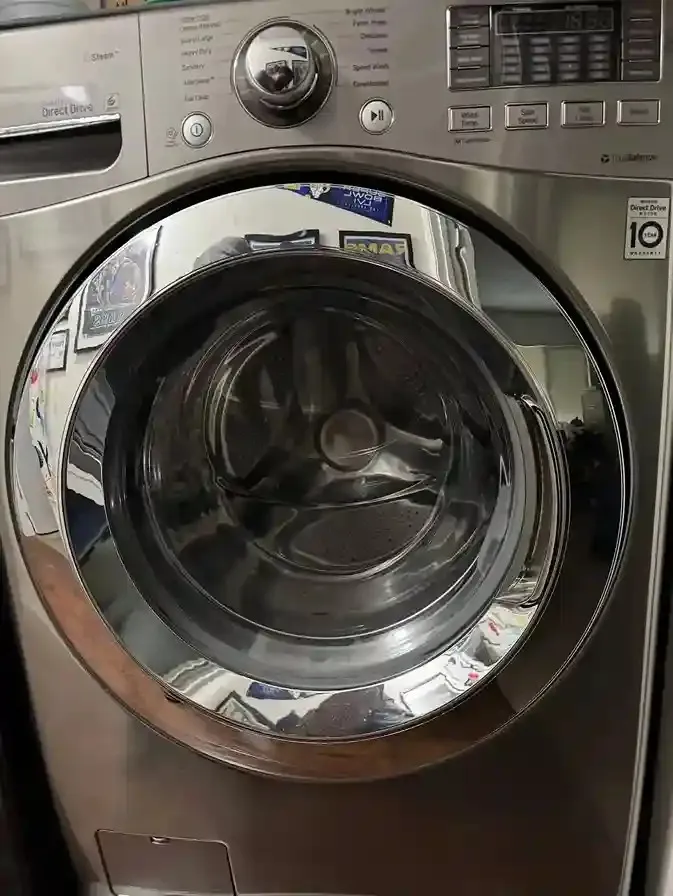
Front loaders save water, but they hold on to moisture and debris. Most have a drain pump filter behind a small panel at the bottom front. A full filter slows draining and can leave clothes wet after the spin.
The rubber door gasket is the other weak spot. Water sits in its folds, and soap film plus lint turns into mold and a sour smell. Wipe the folds dry after the last load of the day and leave the door ajar so air can move through the drum.
Use HE detergent in any high efficiency washer, front or top load, and measure it. Too much soap makes extra foam, which leaves residue in the tub and on clothes. Many washers have a tub clean cycle. Run it monthly with an empty drum.
Top loaders usually have no reachable drain filter, but the lid should still stay open between loads. On every type, check that the machine is level. A washer that rocks will shake hard on the spin and wear its suspension faster.
Dryer care, from lint screen to vent
Clean the lint screen before or after every load. Once a month, run water over the screen. If water beads up and will not pass through, dryer sheet residue has coated the mesh. Scrub it with warm soapy water and a soft brush, then let it dry fully.
The lint that gets past the screen travels into the vent. Rigid or flexible metal duct keeps air moving better than thin foil or plastic. A hose that is crushed against the wall chokes airflow right away.
The first warning sign is time. When a normal load needs two cycles, or the dryer and laundry room feel unusually hot, the vent is likely restricted. Go outside while the dryer runs and check the vent flap. It should open with the exhaust air. A flap stuck shut or packed with lint traps heat inside the machine.
This matters for safety. The National Fire Protection Association estimates that U.S. fire departments responded to about 15,970 home fires a year involving clothes dryers or washers in 2010 to 2014, and 92 percent of them involved dryers. Failure to clean was the leading cause. NFPA advises cleaning lint out of the vent pipe once a year, or sooner if drying takes longer than normal. A professional dryer vent cleaning reaches the full length of the run.
Water hoses and the shutoff valves
Most washers connect to the house with two fill hoses, one hot and one cold. These hoses stay under water pressure all the time, even when the washer is off. Plain rubber hoses age from the inside, and the outside may look fine until one splits.
Braided stainless hoses wrap the inner tube in a metal mesh and hold up better against bulging and bursts. State Farm suggests switching from rubber to steel braided hoses and replacing supply hoses every three to five years. Replace any hose sooner if you see bulges, cracks or rust at the fittings.
Above or behind the washer are two shutoff valves. Turn them off before you leave home for several days, as State Farm also advises. A valve that is stiff or drips at the stem should be replaced before it is needed in an emergency.
Signs that maintenance is no longer enough
Some symptoms mean a part has worn out and cleaning will not fix it.
- Grinding or roaring during the washer spin often points to drum bearings.
- Thumping or squealing from the dryer usually means worn rollers, a pulley or the belt.
- Water left in the drum after a cycle, with a clean drain filter, suggests a pump problem.
- A dryer that heats but leaves clothes damp, after the vent has been cleaned, can have a sensor or blower fault.
- A burning smell from either machine means stop, unplug it and keep it off.
- Error codes that return after a reset need a diagnostic.
For a washer that will not drain, spin or fill, see washer repair. For a dryer with heat or drum problems, see dryer repair.
Maintenance tasks, step by step
Clean the lint screen after every load
Pull the screen out, roll the lint off with your fingers and slide it back in. Once a month, hold it under the tap. If water pools on the mesh, wash it with warm soapy water and a soft brush and let it dry before using the dryer.
Wipe and dry the washer door gasket
Fold back the rubber seal of a front loader and wipe inside the folds with a damp cloth. Remove hair, lint and coins, then dry the seal with a towel. Leave the door slightly open until the drum is dry.
Run a tub clean cycle
Empty the drum and select the tub clean or self clean cycle. If your washer has none, run the hottest normal cycle with a washer cleaner tablet.
Clear the front loader drain filter
Unplug the washer and wait until any warm water has cooled. Lay towels and a shallow pan under the access panel, then unscrew the filter slowly to let water out. Rinse the filter, clean the opening and screw it back in firmly.
Level the washer
Press down on opposite corners of the top. If the machine rocks, turn the front feet until all four corners sit firmly on the floor.
Inspect the hoses and valves
Slide the washer forward a few inches with care not to stretch the hoses. Look for bulges, cracks, kinks or rust at the fittings and feel for damp spots. Turn each shutoff valve off and on once to make sure it moves freely.
Check the dryer transition hose and outside flap
Unplug the dryer, and for a gas dryer leave the gas line connected and do not bend it. Pull the dryer out and make sure the hose behind it is not crushed or torn. Plug it back in, start a cycle and check outside that the vent flap opens.
When to call a technician
When a machine still misbehaves after the steps above, an Airtexno technician can come out, usually the same day. Every visit starts with a diagnostic and a written estimate before any work. The $95 service call is credited toward the repair if you go ahead.
Airtexno repairs washers and dryers of all major brands, from Speed Queen to Miele, and cleans dryer vents. The phone line is answered around the clock, or you can book a visit online.
Repair or replace?
A machine that has been cleaned and checked on schedule usually fails one part at a time, such as a pump, a belt or a sensor, while the drum, motor and cabinet stay sound. That makes a single repair a reasonable choice for longer. A neglected machine often shows several worn parts at once, and that shifts the math toward replacement. The repair or replace guide walks through the age, cost and condition factors to weigh.
Local notes: Thousand Oaks and Ventura County
Water hardness differs across Ventura County, so detergent dosing is worth checking locally. The City of Camarillo 2023 water quality report lists an average total hardness of about 179 parts per million for city well water, with samples ranging from about 75 to 354, while the imported Calleguas water in the same report averaged 146. Minerals in harder water can leave scale in the tub and on heating parts and make detergent work less well. Read your utility's annual report, follow the hard water line on the detergent label if it has one, and run the tub clean cycle on schedule.
Washer repair in Thousand Oaks and Ventura County
A diagnostic visit with a written estimate before any work. The $95 service call is credited toward the repair, with same-day availability in most cases.
See the repair pageSources: content.nfpa.org, nfpa.org, newsroom.statefarm.com, statefarm.com, cms7files.revize.com
Frequently Asked Questions
NFPA advises once a year, and sooner if loads start taking longer to dry. Clean the lint screen after every load in between.
Yes. Leaving the door or lid open between loads lets the drum and seal dry, which helps prevent mold and odor.
The usual cause is moisture and detergent residue trapped in the door gasket, the drain filter or the detergent drawer. Clean all three, run a tub clean cycle and use measured HE detergent. If the smell comes back quickly, the drain may not be clearing fully.
State Farm recommends replacing supply hoses every three to five years, and right away if one bulges, cracks or leaks. Steel braided hoses are a sturdier choice than plain rubber.
You can clean the lint screen, the slot it sits in and a short transition hose with a vacuum and a brush kit. Long runs through walls, attics or roofs are harder to clear completely, and a partial cleaning can push lint further in. For those, a professional vent cleaning is the safer choice.
Often it is, when the cabinet and drum are in good shape and only one part has failed. A diagnostic shows what is worn and what the repair involves before you decide. Machines that need several major parts at once are usually better replaced.